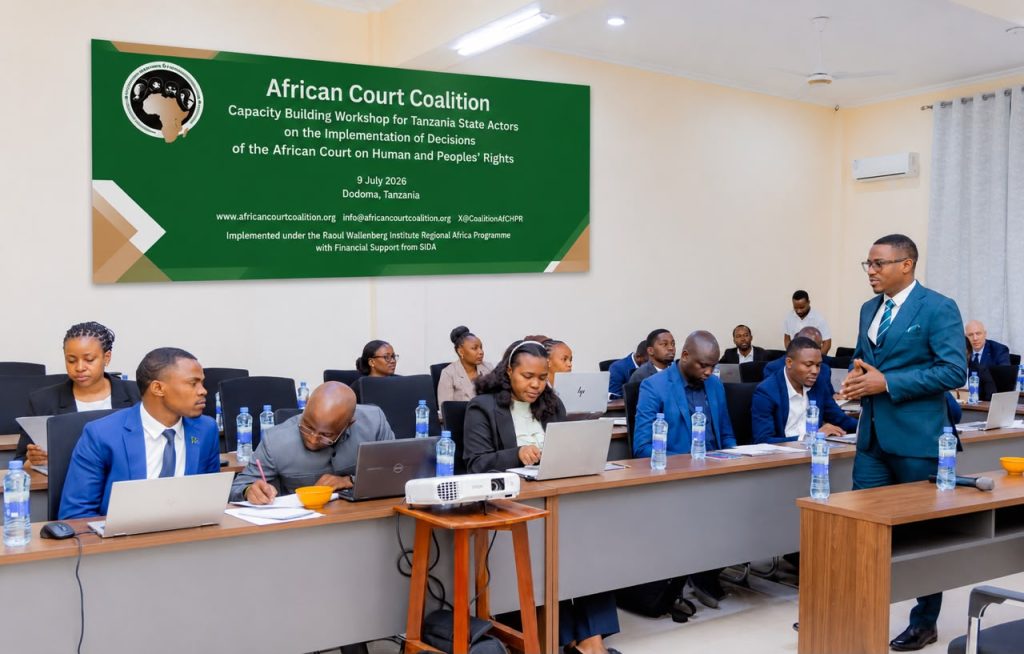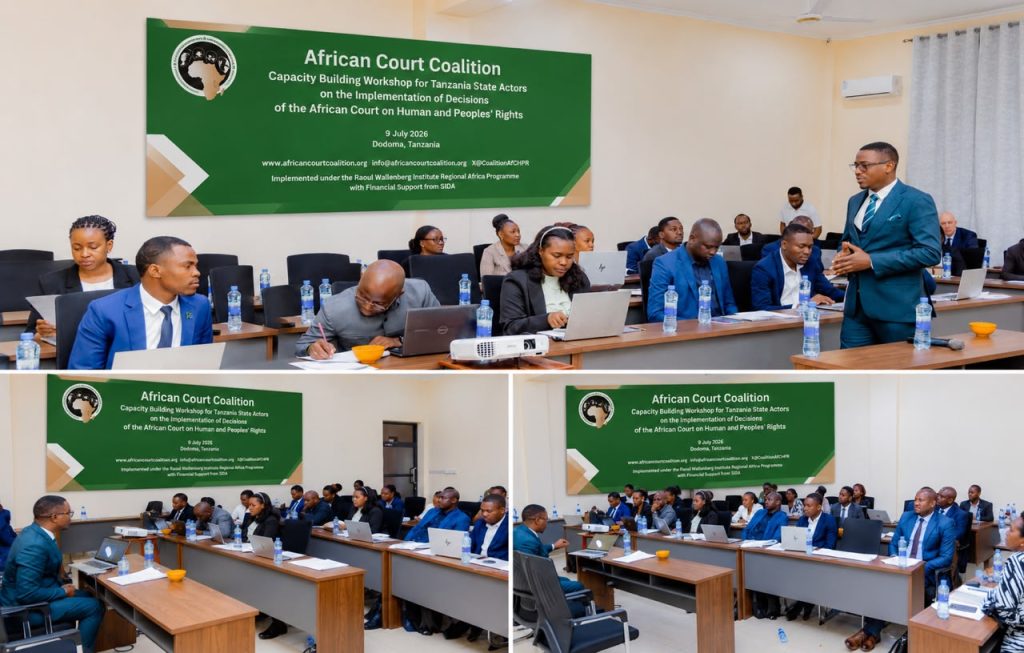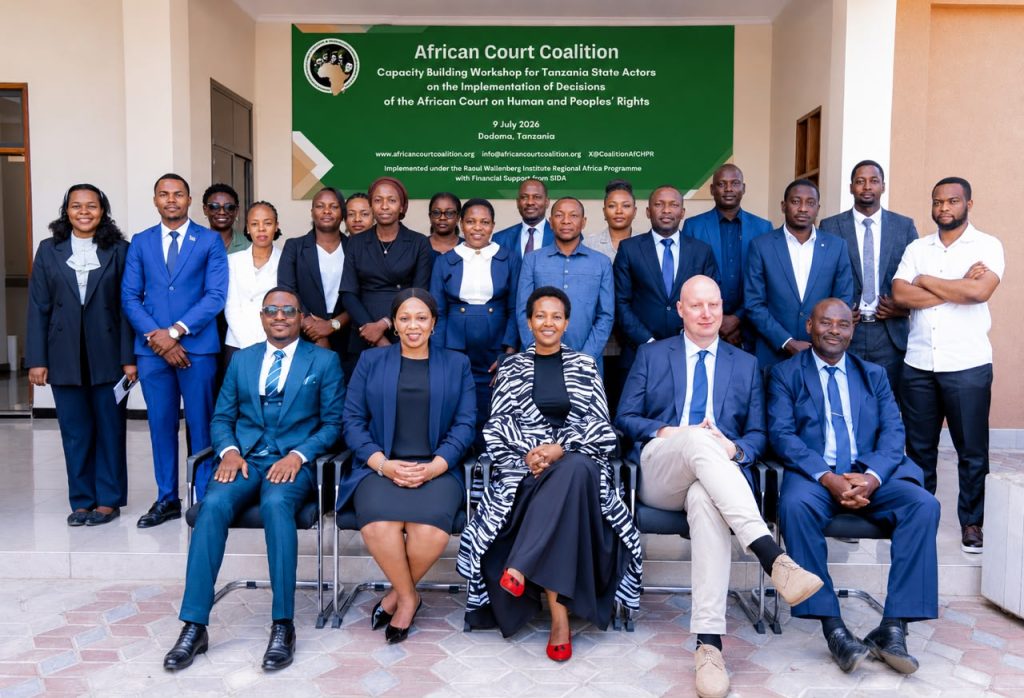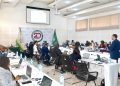



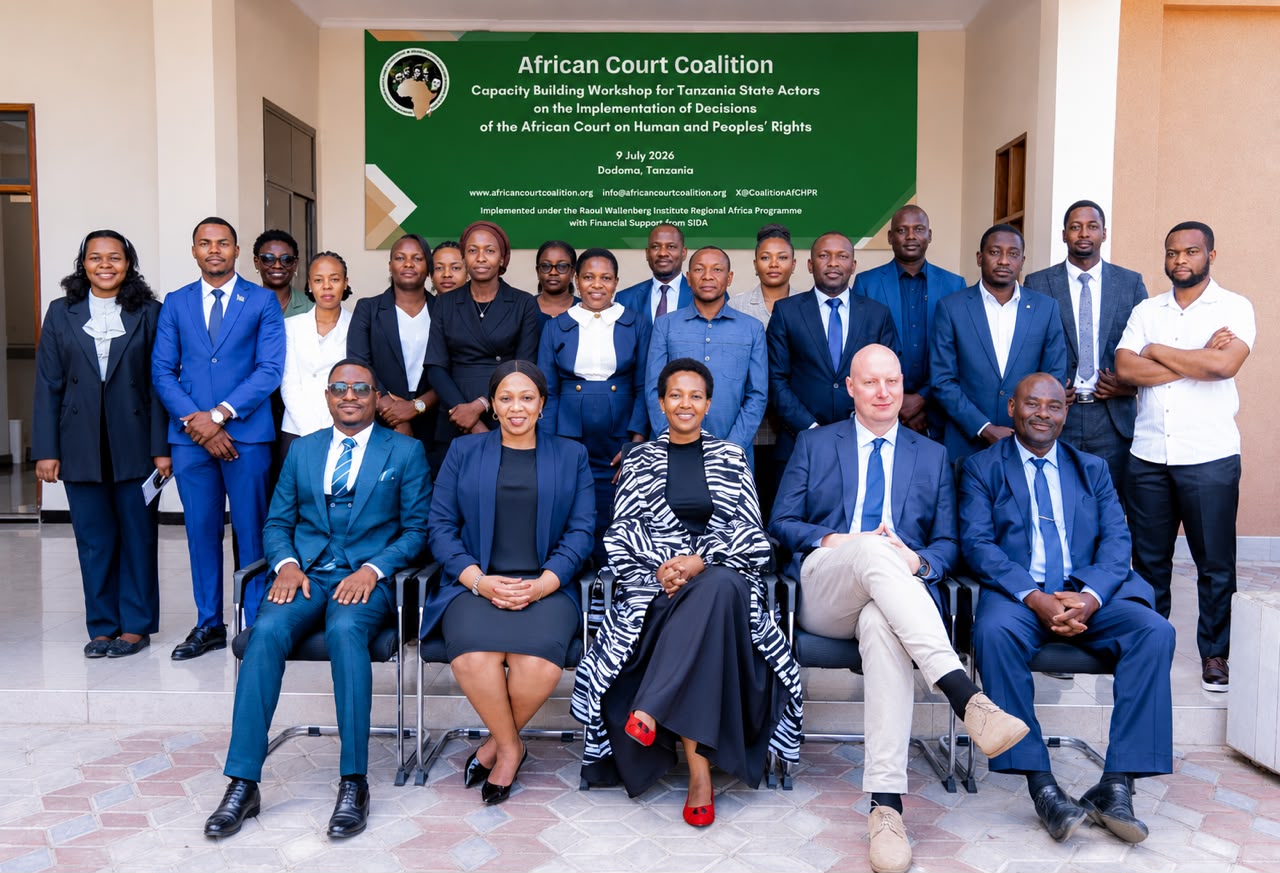
Dodoma, Tanzania – The African Court Coalition (ACC) successfully concluded a high-level capacity-building workshop for Tanzania State actors on July 9, 2026, in Dodoma, Tanzania. The general objective of the workshop was to deepen the collective understanding of implementation processes, clarify roles and responsibilities, and explore practical approaches that can support effective implementation of decisions of the African Court on Human and Peoples’ Rights in Tanzania. The platform also provided an opportunity to share experiences on challenges, opportunities, and best practices relating to implementation and compliance of decisions of the African Court.
During the opening remarks, the Director of the Human Rights Department at the Tanzania Ministry of Constitutional and Legal Affairs (MoCLA), Ms. Nkasori Sarakikya, highlighted the well-established collaboration between the Ministry and the African Court Coalition. She expressed her gratitude to the Coalition for its steadfast commitment and cooperation, and for facilitating such an important platform for constructive dialogue geared towards enhancing State actors’ capacity on the implementation processes.
In her opening statement, Ms. Sophia Ebby, Coordinator of the African Court Coalition, highlighted that the workshop was a direct result of a constructive engagement between the Coalition and the MoCLA that took place exactly one year ago when the two parties engaged in Dodoma on July 10, 2025. She reiterated that the workshop is a reflection of the shared commitment to strengthening institutions, enhancing knowledge, and promoting constructive dialogue on matters relating to the implementation of regional human rights obligations. Ms. Ebby also reaffirmed the pivotal role that the African Court plays in advancing human rights protection in the continent through its judgments that require effective implementation by State Parties to the African Court Protocol.
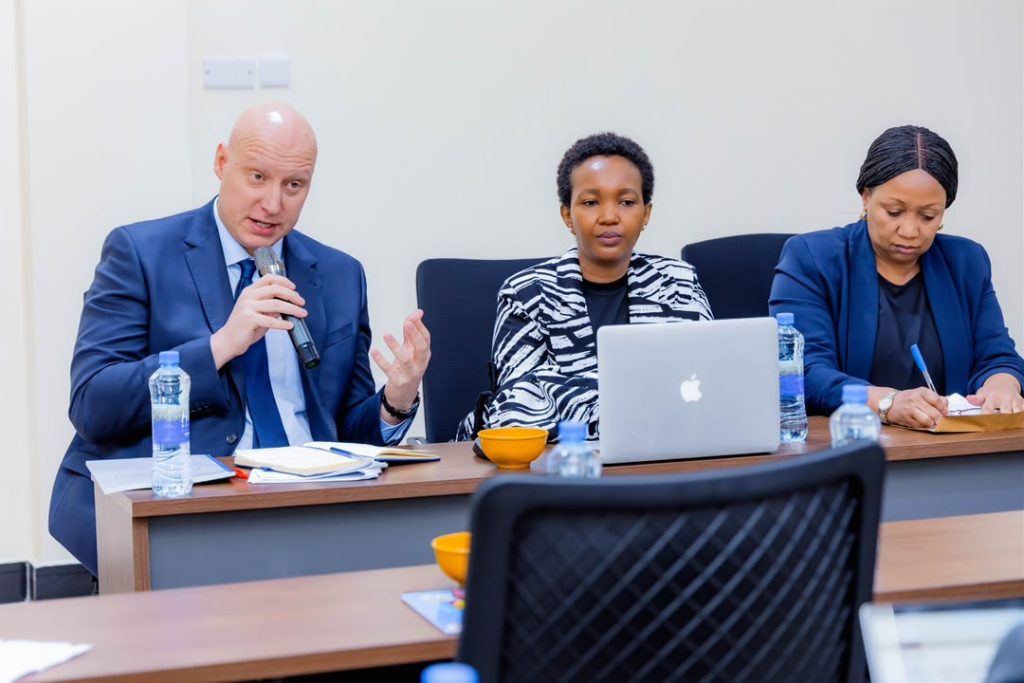
In a fully packed Programme, the lead facilitator and Senior Legal Officer in Charge of Implementation and Compliance Monitoring within the Legal Division of the African Court, Dr. Micha Wiebusch, guided participants through technical sessions, which focused on the comprehensive lifecycle of the implementation process from delivery of judgments at the African Court to implementation follow-up at the national level. This included an analysis of the African Court’s mandate and legal obligations of States Parties under the African Court Protocol. Emphasis was made on the necessity of institutional coordination and the adoption of legislative, administrative, and policy measures. Key discussions also centered on the African Court’s monitoring and reporting framework, follow-up procedures after delivery of judgments, and the vital role national institutions play in information sharing and improving implementation data.
A key highlight of the workshop was the brainstorming session through intensive working groups geared towards the development of comprehensive institutional implementation strategies. Participants collaborated to identify ways that can improve inter-agency workflows and financial coordination required to meet judicial obligations efficiently. Through these group discussions, participants also explored practical steps for aligning domestic legal and policy frameworks with regional human rights standards while strengthening administrative processes to ensure the effective enforcement of human rights protection nationwide.
The final session of the workshop was facilitated by Mr. Achilleus Romward from the East Africa Law Society (EALS) and Coalition partner, where he focused on supporting effective implementation through partnership and dialogue. Mr. Romward emphasized the complementary role of Civil Society and Bar Associations in supporting State efforts and provided comparative examples of constructive engagements between State actors and Civil Society organizations to ensure long-term follow-up and accountability.
The workshop brought together about 30 participants from various Ministerial departments including representatives from the Tanzania Ministry of Constitutional and Legal Affairs, the Ministry of Foreign Affairs and East African Cooperation, the Ministry of Home Affairs, the Attorney General’s Office, the National Prosecution Services (NPS), and the Tanzania Commission on Human Rights and Good Governance (CHRAGG).
ACTION-ORIENTED WAY FORWARD
To transition the workshop’s deliberations into measurable domestic progress, state actors and partners identified several key operational tracks for immediate follow-up, designed to establish Tanzania as a leading model for continental compliance:
- Information and Tool Sharing: The African Court will share core resource documents, including the 2025 State of Implementation of Decisions of the African Court (SIDAC) report, while stakeholders explore utilizing the Pan-African Parliament (PAP) Model Law on the Implementation of Decisions of African Human Rights Bodies as a guiding framework once finalized.
- National Implementation Database & Tracking: In a bid to strengthen domestic information systems, technical teams will collaborate on national-level database design and tracking methodologies, drawing on the structural framework of the African Court’s implementation database.
- Enhanced Institutional Coordination: Participants highlighted the utility of immediate post-decision engagements by the Court to streamline inter-agency coordination. Discussions also explored the long-term feasibility of a dedicated national budget line to execute reparation orders and the potential for targeted staff secondments.
- Continuous Capacity Building: Building on the momentum of this pilot initiative, the partner organizations agreed to explore further capacity-building and technical training initiatives in the near future.
ENGAGEMENT WITH THE COMMISSION FOR HUMAN RIGHTS AND GOOD GOVERNANCE
Following the workshop, on July 10, 2026, the Coalition delegation together with the African Court representative paid a courtesy visit to the Commission for Human Rights and Good Governance (CHRAGG). The delegation held valuable consultations with Ms. Ellen Rwijage, Director of Legal Services at CHRAGG and Commission focal point to the African Court, and Ms. Rosemary Shio, Assistant Director of the Complaints and Investigations Department at CHRAGG.
Recognizing the critical role of National Human Rights Institutions (NHRIs) as independent monitors and fellow coordinators of international commitments, the discussions focused on concrete ways to elevate Tanzania’s compliance profile:
- National Focal Point Framework: The meeting agreed on the need to develop a clearer, institutionalized framework defining the specific roles and responsibilities of focal points within NHRIs. It was proposed that CHRAGG would help to champion the creation of this framework, with the ultimate goal of convening a continent-wide meeting of national focal points to refine these Terms of Reference.
- Independent Monitoring & Parliamentary Engagement: Key strategies were discussed regarding CHRAGG’s mandate to provide independent information on implementation statuses and its vital role in engaging directly with Parliament to oversee the execution of human rights judgments.
- Annual Reporting Integration: To ensure permanent institutional visibility, the discussions highlighted the importance of integrating a dedicated section within the Commission’s annual activity report focused exclusively on the status of continental human rights commitments, including treaty ratifications and the specific status of judgment implementation.
PARTNERS
This initiative is held by the African Court Coalition as part of the activities under the Raoul Wallenberg Institute 2024-2027 Regional Africa Programme (RAP) funded by the Swedish Development Cooperation (SIDA). The RAP Programme focuses on increasing implementation of human rights decisions, judgments, provisional measures, and recommendations from continental and regional bodies in Africa by enhancing national, regional, and continental capacities to monitor and follow up on these outcomes.