
INVITATION TO REPRESENTATIVES OF THE MEDIA
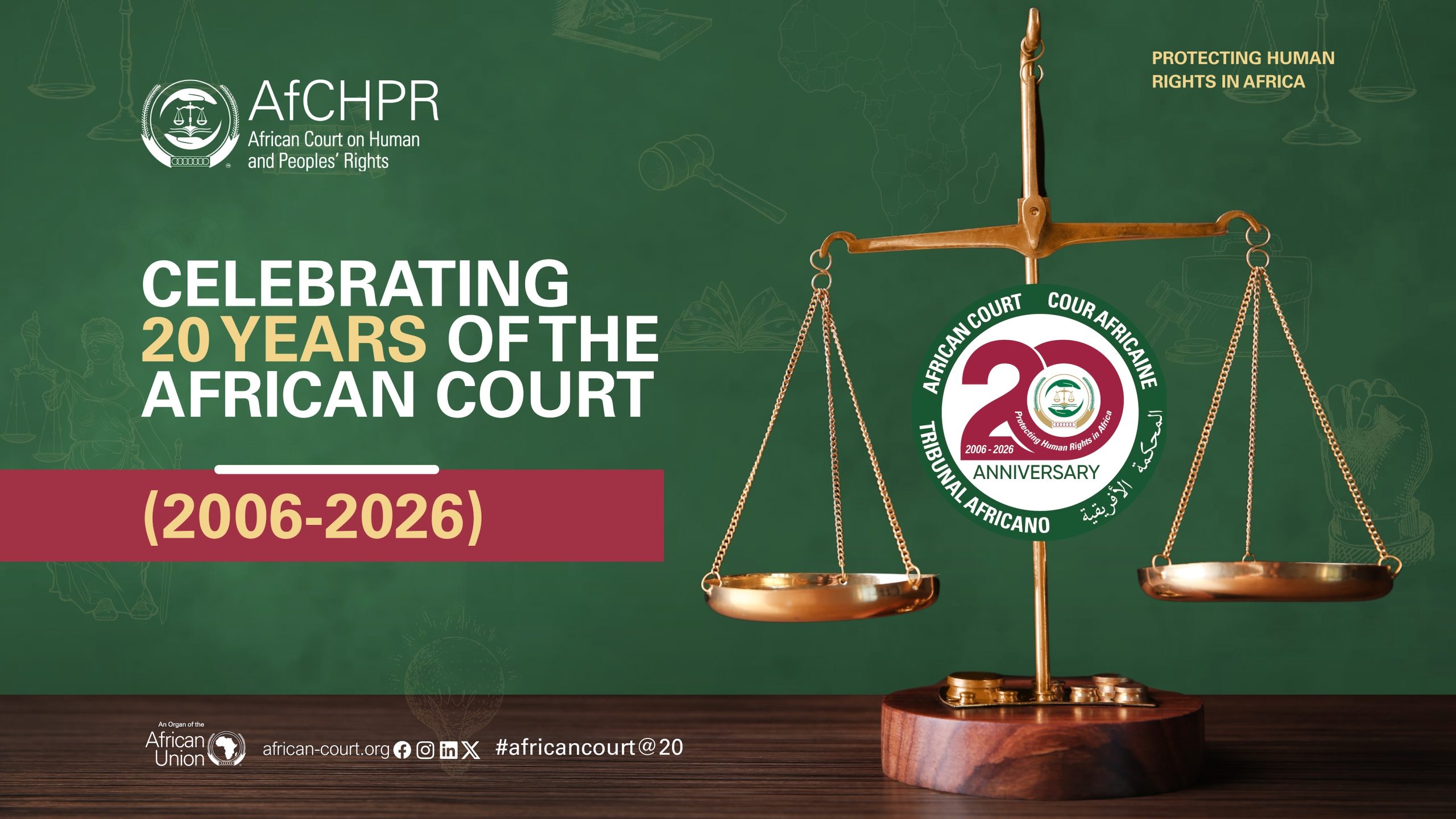
What: African Court on Human and Peoples’ Rights (AfCHPR) Press Briefing on the 20th Anniversary commemorations of the Court (2006-2026) under the theme: “20 years of protecting human and people’s rights”.
Who: Organized by the African Court on Human and Peoples’ Rights (AfCHPR) in partnership with the Department of Information and Communication (DIC) of the African Union Commission (AUC).
When: Thursday, 12th February 2026, 3:00PM
Where: Briefing Room 3, African Union Main Building, Addis-Ababa, Ethiopia.
Background
The African Court on Human and Peoples’ Rights (AfCHPR) is a continental court established by African Union Member States to ensure the protection of human and peoples’ rights in Africa. The Court is an organ of the African Union and it complements and reinforces the functions of the African Commission on Human and Peoples’ Rights which is based in Banjul, The Gambia. The Court is composed of eleven Judges, nationals of Member States of the African Union elected in their individual capacity. The Court meets four times a year in Ordinary Sessions and may hold Extra-Ordinary Sessions.
Established in 2006 and headquartered in Arusha, United Republic of Tanzania, the Court adjudicates cases concerning alleged violations of the African Charter on Human and Peoples’ Rights and other applicable human rights instruments ratified by AU Member States. Its decisions are legally binding on States that have accepted its jurisdiction. The Court has issued four hundred and sixty-three (463) decisions comprising two hundred and seventy-eight (278) judgments and one hundred and eighty-five (185) orders. As the Court commemorates 20 years of operation (2006–2026), it marks a significant milestone in the development of continental human rights jurisprudence and access to justice in Africa.
Key highlights and achievements for the African Court at 20
Over the past two decades, the African Court has marked various achievements. including:
- Delivered landmark judgments and advisory opinions that have clarified and strengthened African human rights standards.
- Strengthened protections for women and girls by addressing discrimination in education, family life and political participation.
- Played a transformative role in shaping standards for credible elections and political participation; such decisions continue to influence electoral reforms across the continent.
- Become a continental reference point for journalists and the media ruled after its ruling that criminal defamation and imprisonment of journalists violate freedom of expression, setting strong regional standards against criminal defamation and for open public debate.
- Strengthened protection for indigenous and marginalised communities, especially on issues of land, culture and natural resources; helping translate legal protection into real outcomes on the ground.
- Defended the right to life by affirming that mandatory death sentencesare incompatible with the obligation to protect that right.
- Underscored the absolute prohibition of torture and ill-treatment as it has found that harsh detention conditions and the State’s failure to prevent ill-treatment violates Article 5 of the Charter.
- Enhanced access to justice through its Legal Aid Scheme and the systematic assignment of counsel, for individuals and groups unable to afford legal representation.
- Deepened institutional complementarity with the African Commission on Human and Peoples’ Rights and other African human rights bodies.
- Enhanced dissemination of its jurisprudence through publication of its Law Reports.
- Provided an opportunity for scholarship on the African human rights system through publication, jointly with the African Commission on Human and Peoples’ Rights and the African Committee of Experts on the Rights and Welfare of the Child, of the African Human Rights Yearbook.
- Expanded visibility and outreach, including multilingual communication, digital engagement and media partnerships.
- Provided opportunities for youth across the continent to gain professional experience through internships, fellowships and research opportunities at the Court.
Participation
Members and representatives of the media are especially encouraged to participate and engage directly with senior officials of the Court during the press briefing. Interested stakeholders from across Africa are invited to attend.
For Further Information:
Ms. Chipiliro Kansilanga Ngue | Senior Information and Communications Officer | African Court on Human & Peoples’ Rights, African Union, Arusha, Tanzania.
E-mail: Chipiliro.Kansilanga@african-court.org
Learn more at:
Website: https://african-court.org
Facebook: https://web.facebook.com/afchpr
Twitter: https://x.com/court_afchpr
YouTube: https://www.youtube.com/@AfricanCourtEnglishChannel
Hashtag: AfricanCourt@20