


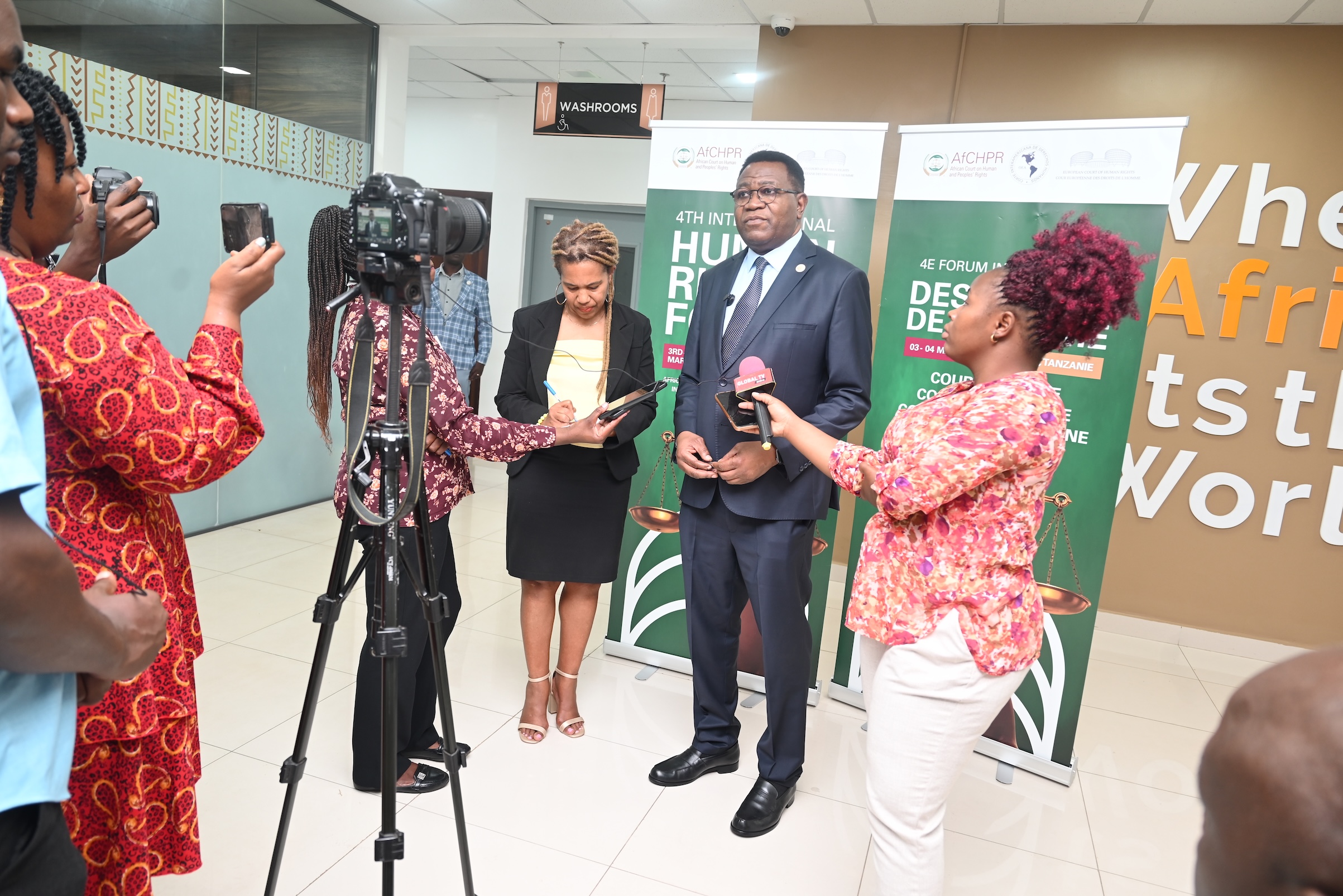
On the occasion of the International Day to End Impunity for Crimes against Journalists, the African Court on Human and Peoples’ Rights (the African Court) and the Federation of African Journalists (FAJ) mark the International Day to End Impunity for Crimes against Journalists and pay tribute to journalists who have been killed, injured, unlawfully detained, threatened or otherwise subjected to reprisals in connection with their professional activities. We recognise the lasting harm suffered by their families, colleagues and communities and affirm the necessity of effective remedies, justice and accountability.
The 2026 global focus, “Threats evolve. Impunity endures” draws attention to the changing methods by which journalists are placed at risk, particularly in conflict situations. The development of new technologies and weapons does not diminish States’ obligations under applicable regional and international human rights law to respect, protect and fulfil the rights of journalists and media workers.
Journalists perform an essential public function by gathering and disseminating information and enabling public debate on matters of public interest. Their safety is therefore closely connected to the effective exercise of the rights to freedom of expression and access to information, as well as to accountability, democratic participation and the rule of law. Attacks against journalists obstruct the enjoyment of these rights and impair the public’s ability to receive information and hold public authorities to account.
The African Charter on Human and Peoples’ Rights guarantees rights such as life, dignity, liberty, security, fair hearing, and the right to information and expression. Any restriction on the exercise of freedom of expression must be consistent with the Charter and applicable human rights standards. Measures that unduly restrict reporting or impose disproportionate penalties for journalistic expression may be incompatible with the protections guaranteed under the Charter and applicable human rights standards. The African Court has applied these principles in cases concerning the exercise of freedom of expression by journalists, including the need for restrictions on such rights, to comply with the requirements of the Charter. In its landmark judgment in Lohé Issa Konaté v. Burkina Faso, the Court found that the imprisonment and other sanctions imposed on a journalist for defamation were disproportionate and violated his right to freedom of expression.
“The protection of journalists is a legal obligation and an essential condition for the effective exercise of freedom of expression and access to information. When attacks are not effectively investigated and those responsible are not held accountable, impunity thrives and denies justice to victim journalists and their families, and increases the risk of further violations. This is what we continue to witness across almost every part of the continent. This injustice against journalists must end. States must ensure that journalists can carry out their work safely, freely and independently, in accordance with their obligations under the African Charter on Human and Peoples’ Rights and international human rights law,” said Omar Faruk Osman, President of the Federation of African Journalists (FAJ).
For the African Court on Human and Peoples’ Rights, the protection of journalists is closely linked to the protection of freedom of expression, access to information and the rule of law.
“Journalists play an essential role in keeping societies informed and promoting accountability. When they are threatened, attacked or unlawfully restricted because of their work, the consequences go beyond the individual journalist and affect the public’s right to information. States have a duty to prevent such violations, investigate them effectively and provide access to justice and appropriate remedies. Ending impunity is essential to the protection of freedom of expression, human rights and the rule of law,” said Hon. Justice Blaise Tchikaya, President of the African Court on Human and Peoples’ Rights.
The African Court and FAJ reiterate that States are required to exercise due diligence to prevent attacks against journalists, protect those at risk, and ensure prompt, independent, impartial and effective investigations into alleged violations. Where sufficient evidence exists, those responsible for crimes against journalists should be prosecuted and, following conviction, subject to sanctions proportionate to the gravity of the offence. Victim journalists and their families must have access to effective remedies, including reparation where appropriate. These measures are necessary to discharge the obligation to protect human rights and to prevent impunity from facilitating further violations.
The required protective measures must address the range of risks faced by journalists, including killing, physical assault, arbitrary arrest or detention, threats, intimidation, surveillance, judicial harassment and technology-facilitated abuse. States should take account of the particular risks facing women journalists, including gender-based threats and online violence. Journalists must also be afforded protection while reporting on elections, demonstrations, emergencies and armed conflict, consistent with applicable human rights law and in situations of armed conflict, international humanitarian law.
On this day, the African Court and FAJ remember journalists whose rights have been violated in connection with their work and reaffirm that effective protection requires prevention, accountability and access to justice. We call upon States, judicial and law-enforcement authorities and other relevant actors to give effect to these obligations and to uphold an environment in which journalists can work without fear of violence or unlawful interference.
The protection of journalists safeguards the rights of individuals and the public, strengthens the administration of justice and supports the rule of law. Ending impunity for crimes against journalists is therefore an obligation of justice and essential to advancing the protection of human rights, accountability and the rule of law.